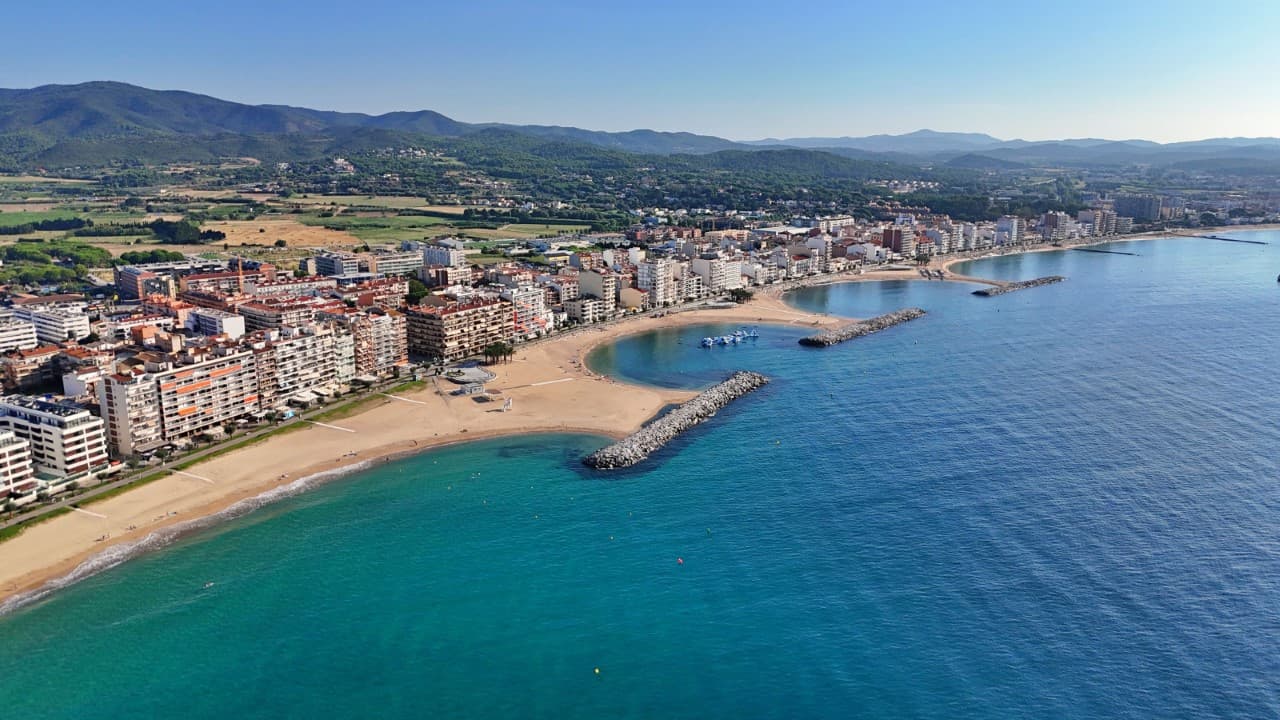

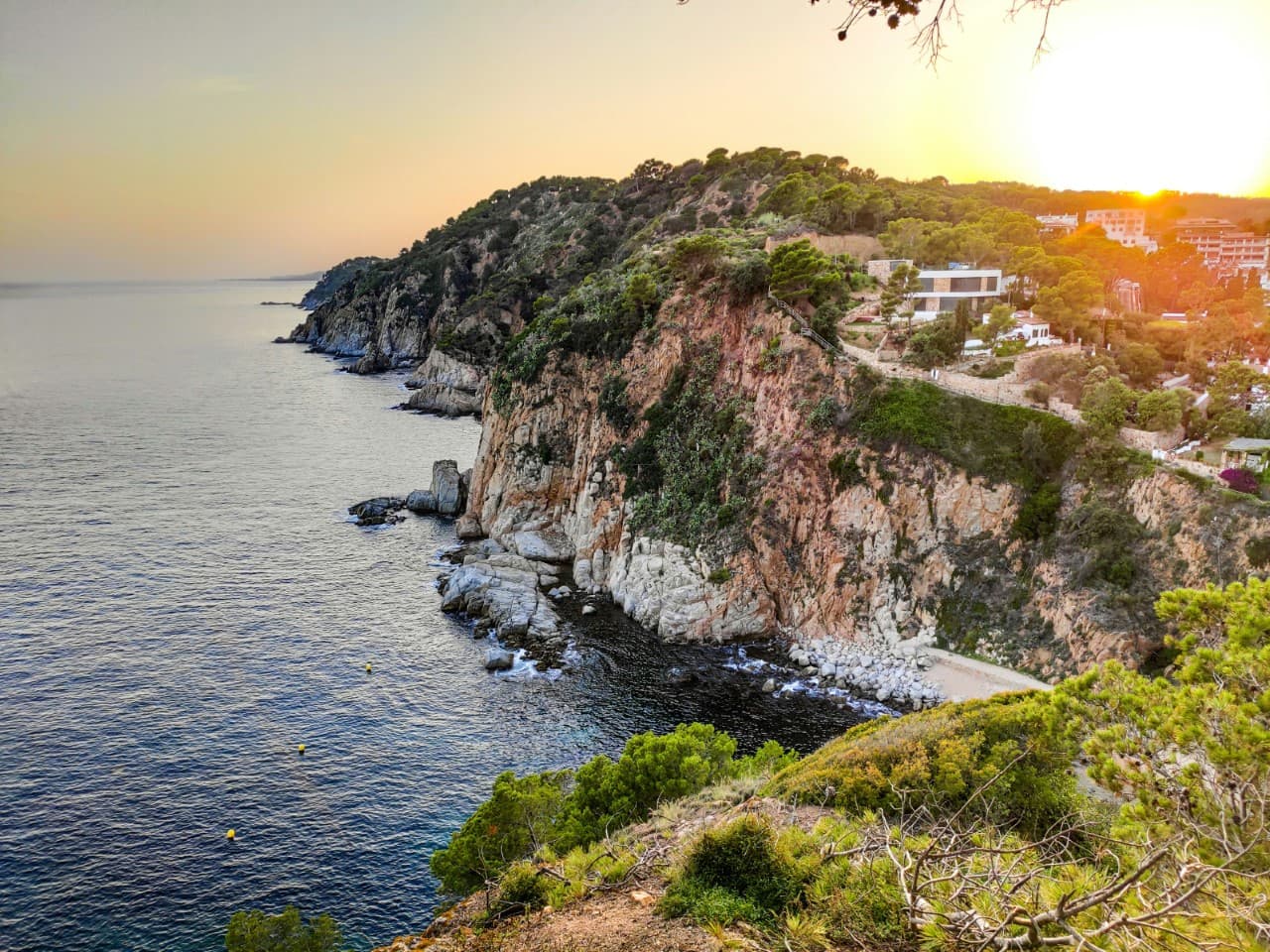
If you own a home on this coast, or you're thinking about buying one, the same question comes up every spring: is the market still moving, and in which direction? The first quarter of 2026 gives a fairly confident answer. Prices are still rising, foreign demand is at a record high, and the premium coastal pockets remain as tight as ever. But the pace has settled into something steadier than the post-pandemic years, and that shift matters for how you plan a purchase or a sale.
Here is what the numbers say, and what they mean in practice.
Prices: still climbing, at a calmer pace
Catalonia's average property value reached around €2,670 per square metre in the most recent quarter, a rise of roughly 6.2% year-on-year. That is the strongest annual growth the region has seen since 2009, which tells you the underlying demand is real rather than speculative.
Girona province sits just behind the regional leaders at about €2,374 per square metre, up 5.8% over the year. Barcelona remains the most expensive province at roughly €3,050 per square metre, while Tarragona trails at around €1,721. Girona's position in the middle is worth paying attention to: it captures much of the international second-home demand that Barcelona generates, without the city-centre pricing.
The headline averages, though, hide what really happens on the coast. Prime towns command a clear premium driven by one simple factor, scarcity. Strict coastal protection laws and very limited buildable land mean the best locations cannot simply add supply when demand rises.
To give a sense of the spread along the coast:
- Cadaqués sits around €6,700 per square metre, reflecting its protected setting and limited housing stock.
- Begur ranges from roughly €4,000 to €5,200 per square metre depending on the exact location and sea views.
- Palafrugell averages near €3,800 per square metre across its villages, including Calella and Llafranc.
- L'Estartit remains more accessible at around €2,400 per square metre, offering value further along the coast.
The pattern is consistent: the more protected and sought-after the setting, the higher the floor under prices, and the less those prices move when the wider market cools.
Who is buying: foreign demand at a record
One of the clearest stories of the past year is who is actually signing the contracts. In 2025, roughly one in four homes sold in Girona went to a foreign buyer, the highest share of any province in Catalonia. For comparison, Tarragona sat near 16% and Barcelona around 14.2%.
Nationally, foreign buyers paid an average of about €2,417 per square metre, a record high, with non-resident buyers passing €3,100 per square metre for the first time. In other words, international buyers are not only numerous on this coast, they tend to buy at the higher end of the market.
The mix of nationalities is shifting too. In the most recent quarter, the largest groups of foreign buyers in Spain were British (around 7.9%), Dutch (around 6.8%) and German (around 6.7%). The detail that stands out for the Costa Brava is the Dutch growth: Dutch buyers have increased by almost 50% since 2023, and Girona specifically saw growth of more than 42% from this group in 2025. For a coast that has long been popular with Dutch and Belgian families, that is a meaningful acceleration rather than a passing trend.
Part of the explanation sits at Girona airport. The steady expansion of direct flights from Northern European cities feeds second-home demand directly, and it is one of the structural reasons the coast keeps attracting the same buyer profile year after year.
The outlook for the rest of 2026
Most forecasts point to continued, moderate growth rather than a sharp move in either direction. The coastal market overall is widely projected to grow somewhere in the range of 4 to 6% across the year, with the premium pockets like Begur, Cadaqués and Platja d'Aro expected to run a little hotter, around 6 to 8%.
The framing that fits best comes from BBVA Research, which describes the Spanish housing market as entering a more "mature" phase. Demand remains strong, but transaction growth is increasingly limited by how little supply there is, not by any weakening of buyer interest. That distinction is important. A market held back by scarce supply behaves very differently from one held back by nervous buyers, and it tends to keep a firm floor under prices.
Two things are worth watching over the coming months. The first is the continued growth in international flights into Girona, which has a direct line to second-home demand from abroad. The second is the ongoing political debate around taxation on foreign buyers. Neither has materially changed transaction patterns so far in 2026, but both are worth keeping an eye on if you are planning a move over a longer horizon.
What it means in practice
Numbers are only useful if they help you make a decision. Here is how we read the current market for the two groups who ask us most often.
If you own a home here, your position is strong, particularly if the property is well located and holds a legal tourist licence. Demand for quality homes on the southern Costa Brava is consistent, rental interest is healthy, and the scarcity that supports prime pricing is not going away. There is no pressure to act simply because the market is moving; a good home in a good spot is a comfortable thing to hold.
If you are buying, the headline is that preparation matters more than timing. Prime listings, the ones where location, sea views and paperwork all line up, are still selling quickly and without meaningful discounts. Waiting for a dip in those segments has rarely paid off in recent years. Where there is room to negotiate is in the properties that need renovation, or those in more car-dependent inland spots, which are taking longer to sell and occasionally showing price reductions. Knowing which category a property falls into before you view it is half the work.
In both cases, the value of local knowledge is hard to overstate. The averages tell you the direction of the market, but the difference between two streets, two orientations, or two licensing situations can be larger than a full year of price growth. That gap is exactly where good advice earns its place.
Quality Estates has worked across sales, rentals, construction and maintenance on the Costa Brava for over two decades. If you would like a clear, no-pressure view on what your home is worth today, or on a property you are considering, we are always glad to talk it through.
Sources: Colegio de Registradores, API Catalunya, Idealista. Figures are the most recent available at the time of writing and are rounded for readability. Market data describes general trends and should not be taken as a valuation of any specific property.